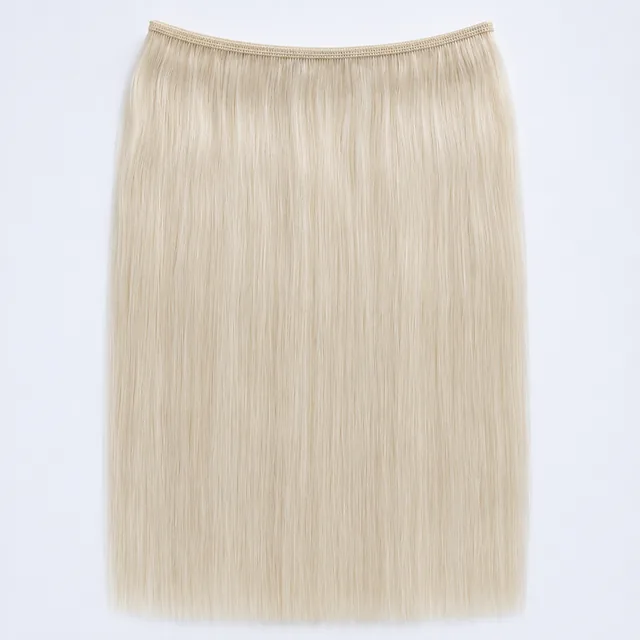
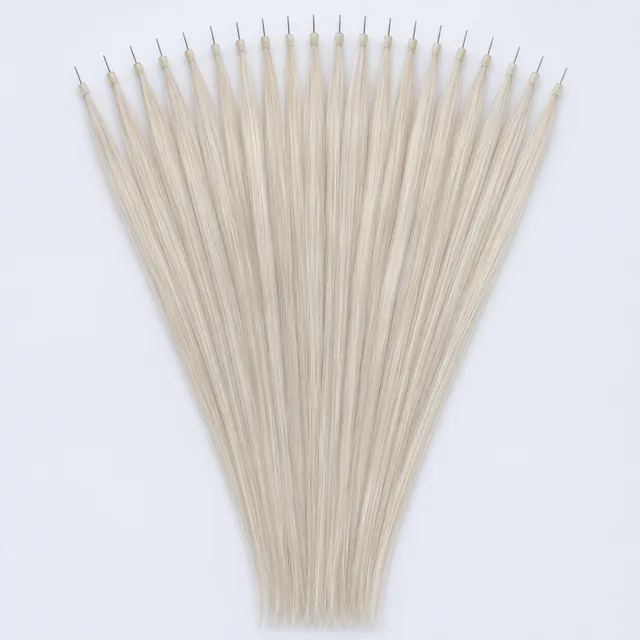
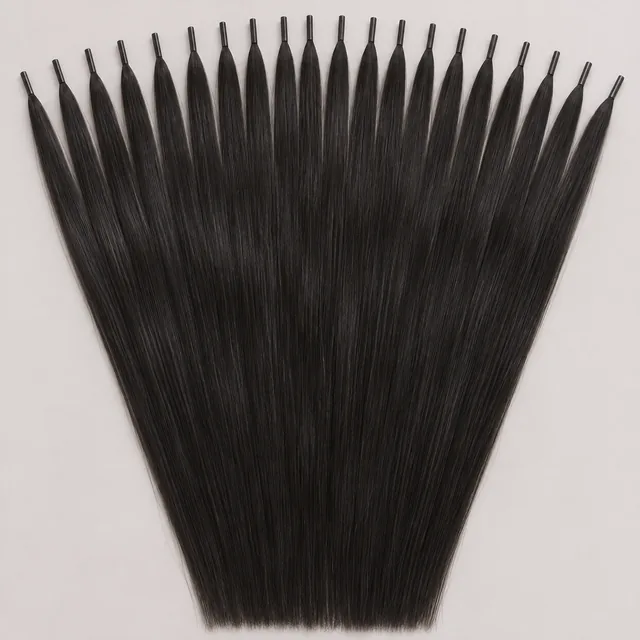
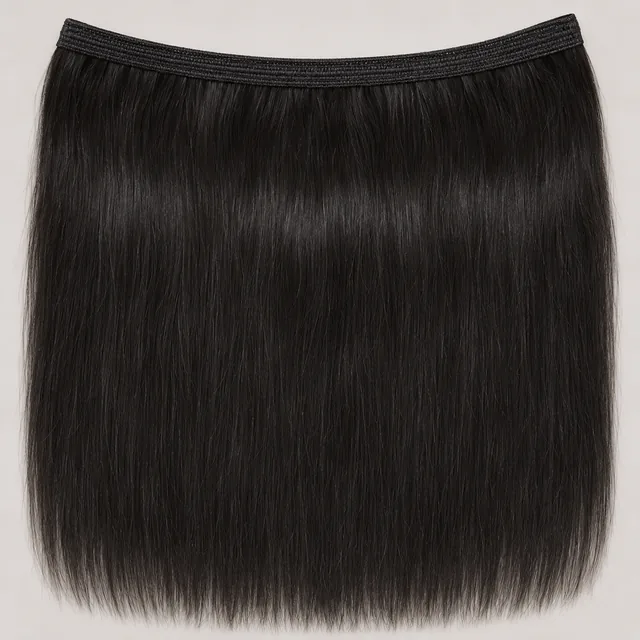
- style
- colour
- length
- cap construction
- structure
- colour
- length
Pick styles from both categories, fill in the fields each one needs, and send them as one combined wholesale inquiry. One reply comes back, line by line.
Buyers who stock wigs and extensions side by side, across North America and Europe, and want to source both from one place, on one list.

Supplying stores and salons in their market, usually across many styles in both categories at once, with each line kept separate and a note saying which customer it is for.
Start hereThe inquiry list, one line per style.

Wigs on display, extensions on the shelf. A store buyer often refreshes a handful of wig styles and a few extension structures in the same round.
Start hereThe product centers, shortlisting from both.

Selling both categories to their own clients and working from what clients ask for: a wig style for one, a tape-in colour for another.
Start hereThe references closest to those looks, plus your changes.

Building a range under their own name across wigs and extensions. Each style in the range becomes its own line, quoted, adjusted and reordered on its own.
Start hereOne line per style in the range.
The person sending the list can be an owner, a buyer, a stylist or a purchasing manager. The list works the same way for each.
Two categories, each described by the things that matter for it, travelling on the same numbered list.


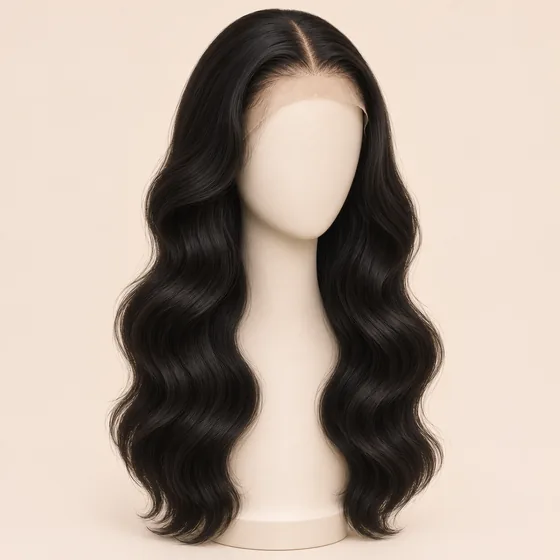
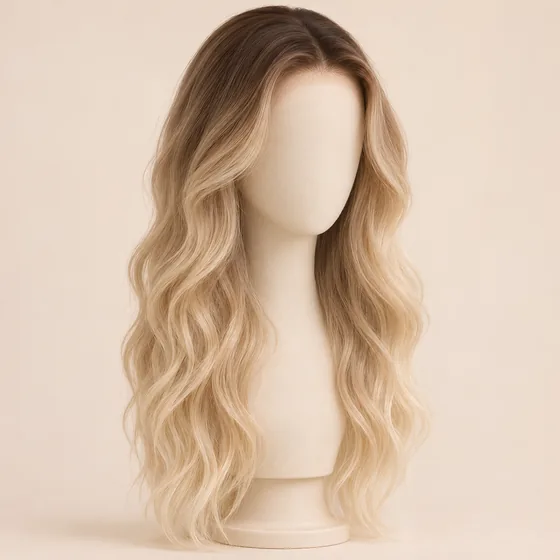
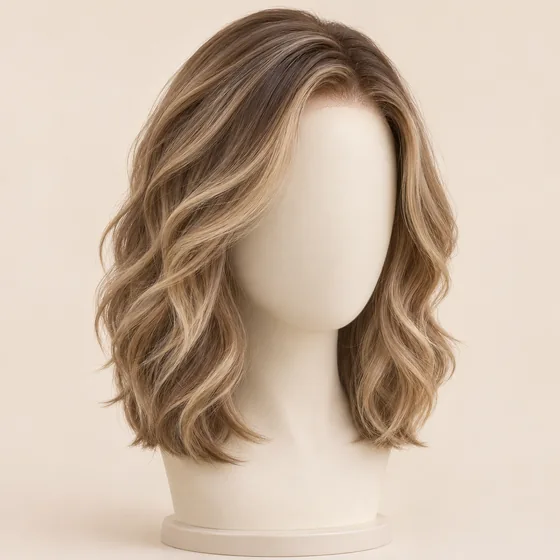
First style directions: bob and lob, mid-length straight, long layered and natural wave.
Explore WigsCap construction is asked on wig lines, structure on extension lines.


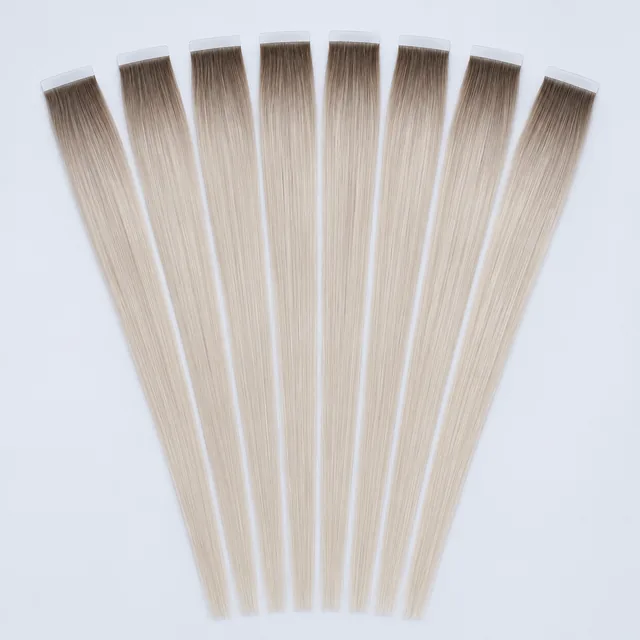
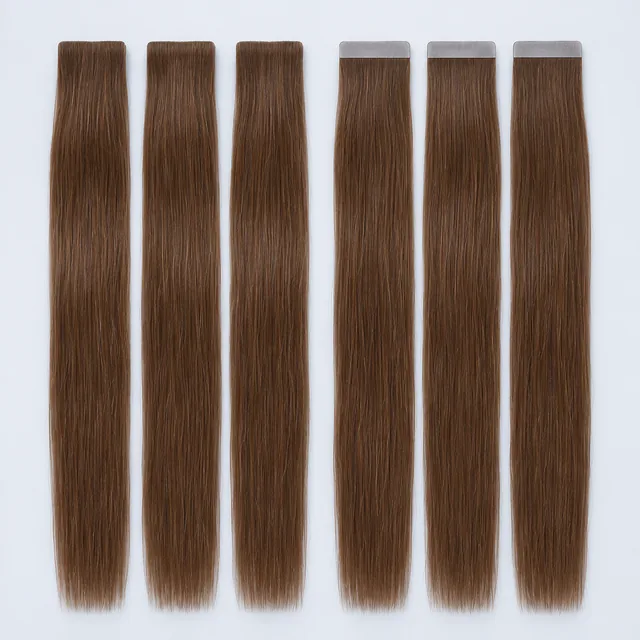
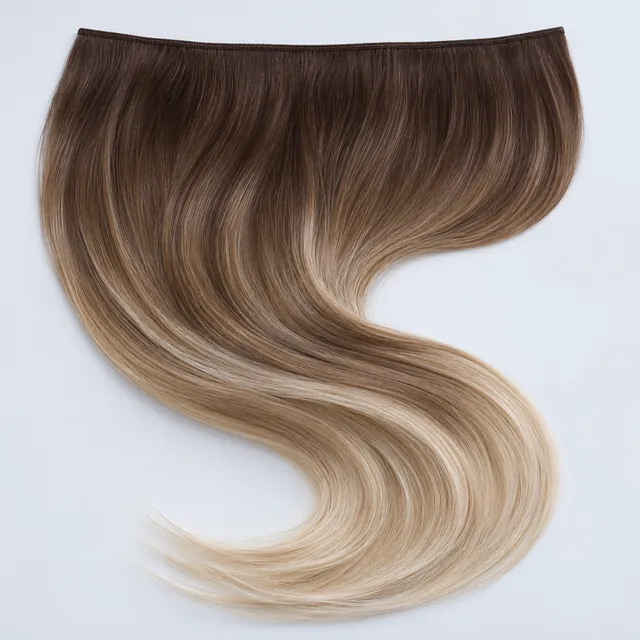
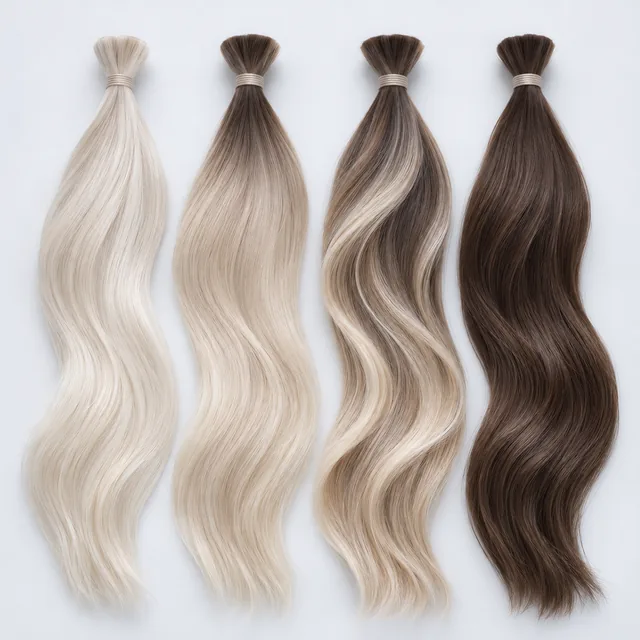
First structures: tape-in, Genius and flat weft, machine weft, nano and I-tip.
Explore Hair ExtensionsThe inquiry list is the one document you send. Wig lines and extension lines sit on it together, and it reaches us in a single submission.
Because the full list arrives at once, it is read as a whole and answered as a whole, line by line.


Organised by style, colour, length and cap construction. The references are for choosing and discussing styles; images show the style direction.


Every wig line asks the same five things. Together they say exactly which wig you are asking about.
Start with a selection reference, such as W04 Curly Bob, or describe the cut, parting, texture and how the front falls. A reference fixes the starting point, so you only describe what differs from it.
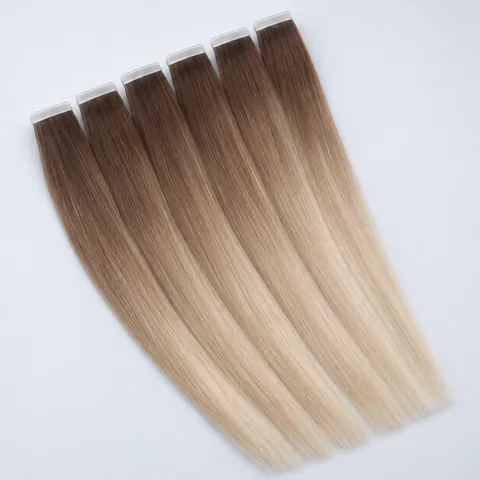
Write it the way your customers ask for it: rooted blonde, cool brown with balayage, a natural dark shade. Several colours of one style get one line each, so each is quoted separately.
colour as W06Write the length in the terms you use when you sell it, or point at a reference that is close and say how yours differs.
length as W02Write the cap construction your customers ask for on that style. It is answered line by line with the options for that line, so you choose with the options in front of you. With no preference yet, mark it not sure and ask about cap construction options.
cap construction: not sureThe quantity you want quoted for that line. Different colours or lengths of one style each carry their own line and quantity.
A wig line can also carry a note: which store, which client, or a detail outside the fields, such as a fringe shorter than the reference.
Mixing wig and extension lines on one list changes none of this: each line is read against its own category's fields.
Add the wig styles and extension structures you want quoted to one list and submit your requirements to receive a quote.
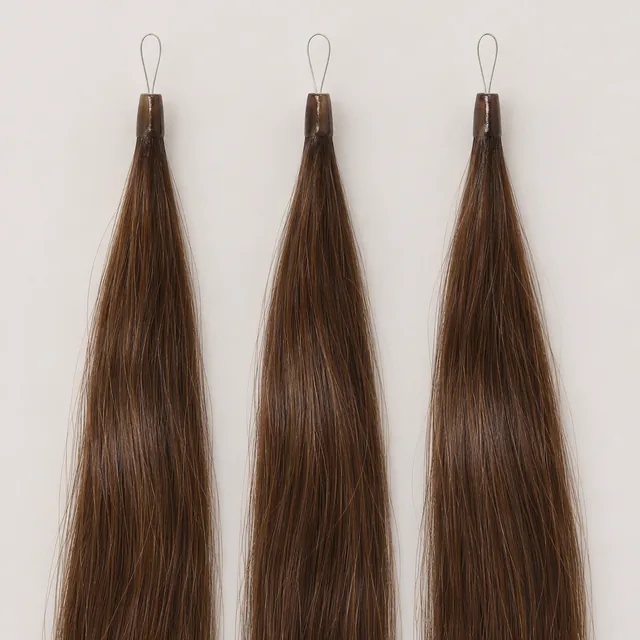
Organised by structure first, then colour and length. The references are for choosing and discussing; images show the style direction.


Structure is the first field on every extension line and decides what the rest of the line describes. Buyers usually choose it by how the extensions are fitted and worn.

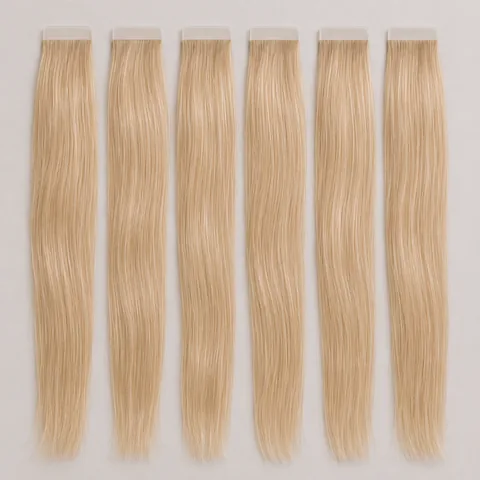
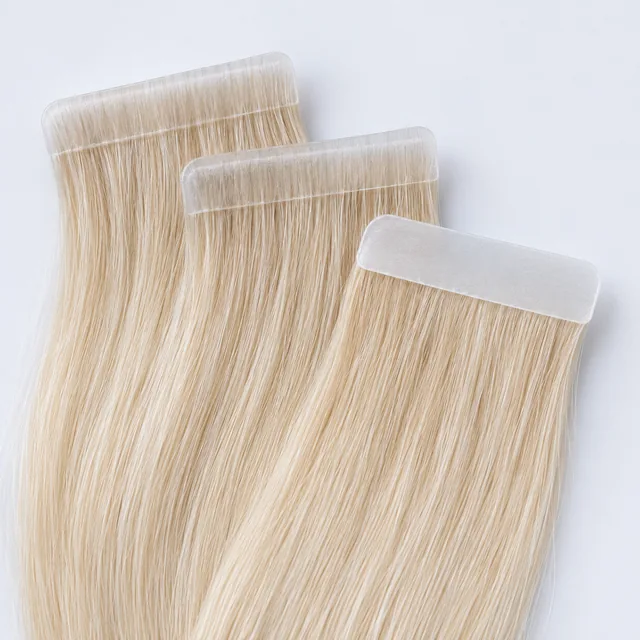
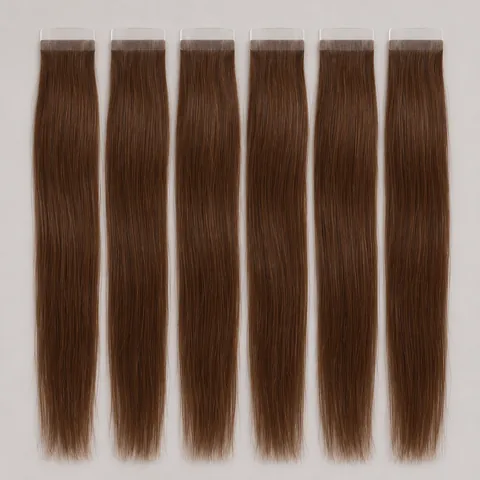
Flat panels taped on each side of a thin section of the client's hair.

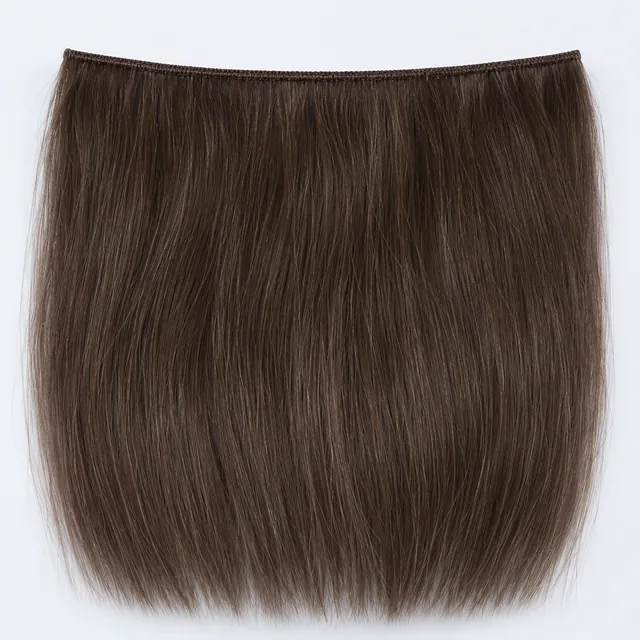
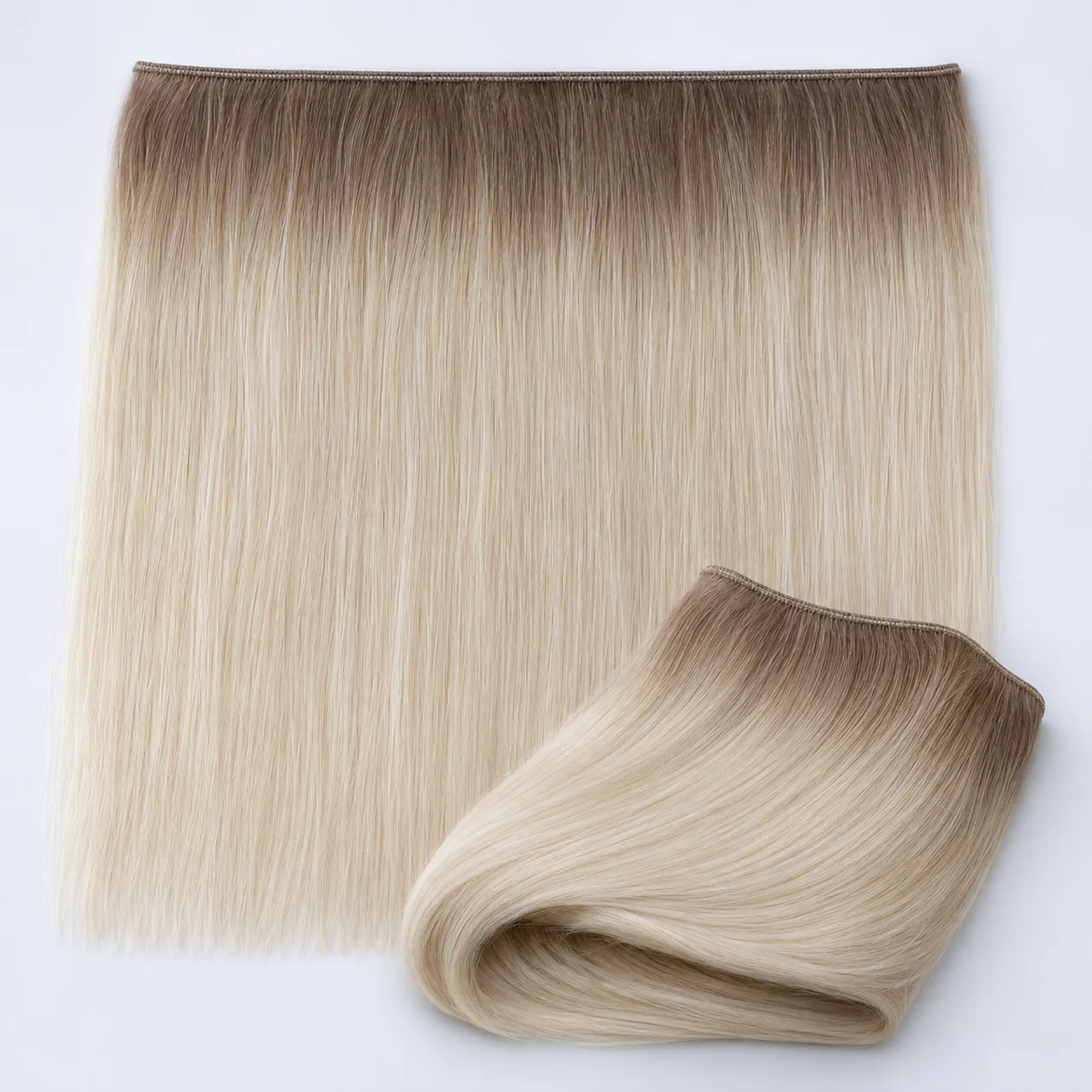
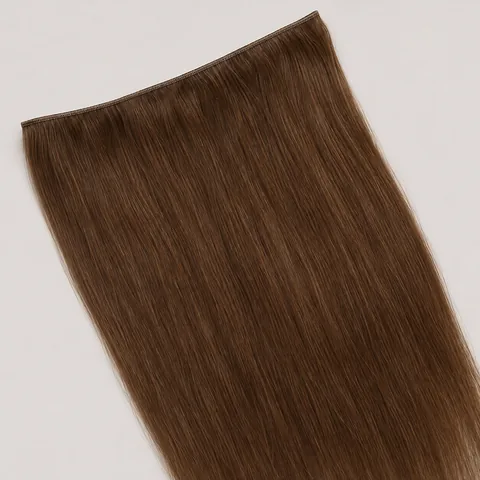
Wefts made to sit flat against the head, sewn or beaded in rows by a stylist.

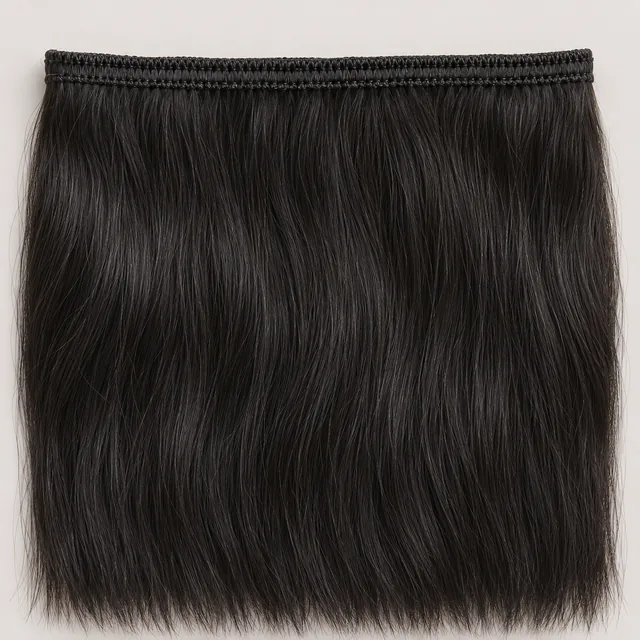
A sewn weft track, for stylists who sew in wefts or build their own pieces.

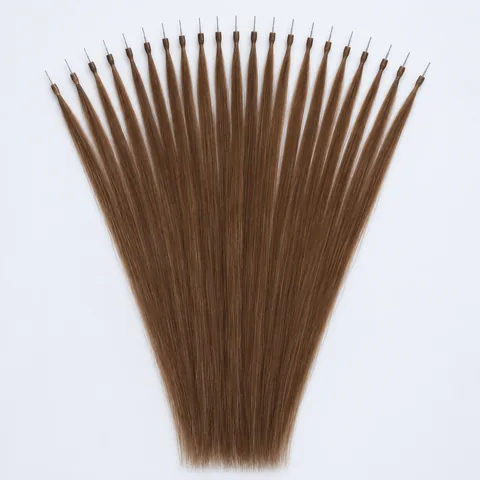
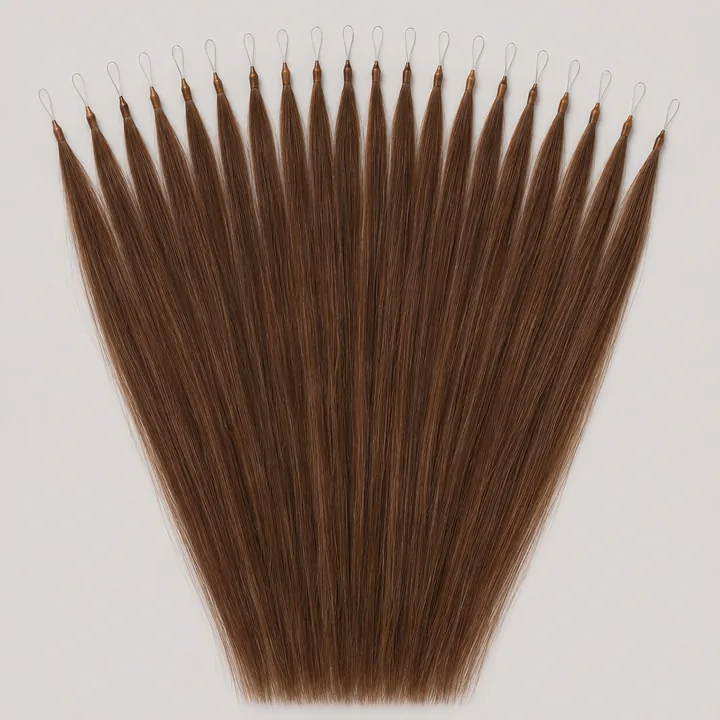
Strand by strand, each strand fitted with a small ring or bead.
| Structure | Tape-in | Genius and flat weft | Machine weft | Nano-tip and I-tip |
|---|---|---|---|---|
| Often listed first by | Buyers supplying salons that offer quick, flat installs | Salons that fit fuller looks across the back of the head | Stores and distributors serving sew-in stylists | Salons placing hair strand by strand, or in specific areas |
| Worth writing in the note | A less visible tape, the way E02 Brown Invisible Tape is described | Which of the two you want | Whether it sits next to flat wefts in your range | Which of the two you want |
| On your list | Its own line | Genius and flat weft on separate lines | Its own line | Nano and I-tip on separate lines |
Several structures in one colour: one line per structure, linked by the colour field, for example "colour as E03" on a tape-in line. Structure can also be marked not sure, with how those clients wear their extensions in the line note; the reply gives the structure directions for that line.
The structure you pick for a line is the structure answered for that line.
Colour is the field buyer and supplier most often describe differently, so the list lets you anchor it to a reference.
Any field on any line can be a reference plus a change: the reference sets the baseline and you write only what is different.


It works across categories: a salon selling W07 Bronde Layered Waves can ask for extensions in the same colour by writing "colour as W07" on an extension line.
A colour no reference shows can be described in your own words, or sent as a reference image for the line on WhatsApp. One style in several colours takes one line per colour.
You do not need every field settled before you send the list.

Any field on any line can be marked not sure, even quantity. The reply either asks about that field on that line or gives the directions to choose from. Cap construction on wig lines and structure on extension lines are the ones most often sent this way.
cap construction: not sure
A style that is not in the catalog still goes on the list. Describe it, or send a reference image for the line on WhatsApp, and fill in the other fields as for a catalog reference. It is answered under its line number like any other line.
own reference · photo on WhatsApp
An existing spec sheet or purchase list can replace line-by-line filling: add it to the inquiry as a link, or send it on WhatsApp. The reply follows the lines of your sheet, in your own line order.
spec sheet link on the listThe open points come back as questions under the line they belong to, so you settle them one line at a time.
One list gets one reply. Wig lines and extension lines are answered in the same reply, not in two threads, and each answer sits under the line number it had on your list.

Wig lines against style, colour, length, cap construction and quantity; extension lines against structure, colour, length and quantity, with structure directions wherever structure was marked not sure.
Any line that needs more is also listed in its own section, with exactly what is needed: a colour reference, a length, a choice between options. You answer by line number; the rest of the list stays as it is.
Written in English or French, as you asked on the list. Submit your requirements to receive a quote: it follows the same list, so each style can be compared, approved or dropped on its own.
For a buyer sourcing both categories: one document to read, one set of questions to answer and one place to decide on wigs and extensions together.

There is no separate wig supplier and extension supplier to find, brief and follow up.
Phone and WhatsApp reach the same window, Mon–Sat 09:00–18:00 (GMT+8).
Reach the same window on WhatsAppBuyers who carry both categories often source wigs from one supplier and extensions from another, each with its own form, thread and reply format.
| What you are sourcing | Two suppliers, two threads | Human Hair Supply |
|---|---|---|
| Who you contact | A wig supplier and an extension supplier | One contact window for both categories |
| Inquiry format | A general form or a free-text message per supplier | One inquiry list with numbered lines |
| Fields asked | The same general questions for every product | Wig lines ask cap construction; extension lines ask structure |
| Pointing at a style | A description or a screenshot in the chat | A selection reference, plus only the field that changes |
| Fields you are unsure of | Left blank or guessed | Marked not sure and answered in the reply |
| Reply | Two replies in two formats to put side by side | One reply, each answer under your line number |
| Changes after sending | Re-explained in the thread | Named by line number |
| Reorders | The request written again for each supplier | Your last list sent back, changed fields marked |
| Several stores or clients | Separate inquiries per store | One list, a note on each line |
The line number you give a style is the line number it keeps in every reply.

The list is yours to edit: add lines, remove lines, change any field, move a line from one store note to another.
Name the line number and the field; the change applies to that line only. New lines take the next numbers on the same list.

Distributors supplying several customers, and buyers with more than one store, keep everything on one list. Each line's note says who it is for: a store, a customer, a branch or a region.
Lines for different stores stay separate lines, even when they ask for the same reference, so each is quoted and adjusted on its own. The reply keeps your notes, so each store's lines can be passed on to it.


Send back your last inquiry list, or only the lines you want again. The styles never need describing twice.

Read as they were, with their selection references, own references and notes.

Only the field that changes is written, on its line.

A structure you did not order before joins the same list under the next number.
The reply comes back against the same line numbers, so you compare it with the last round line by line.
A reorder list mixes categories as freely as the first one: repeat two wig lines, change the colour on an extension line, add a new structure.
A list with one category works the same way as a mixed list: numbered lines, category fields, one reply.

Every line is a wig line, numbered from 01, answered in one reply.

Every line is an extension line, numbered from 01, answered in one reply.
When the other category comes later, it goes on the same list.

The site shows the range you can inquire about. Each quote is written against your own list.
Five steps from the first look at the product centers to a quote, all on the same list.

Browse the wigs and hair extensions product centers and note the references closest to what you sell.

One line per style: a reference or your description, the category fields and a quantity. Mark open fields not sure, add store notes, or attach your spec sheet.

Through the inquiry form or on WhatsApp, wig lines and extension lines together.

Line by line. A first inquiry also gets a few questions about you.
Business type · market · most urgent lines · existing spec sheet · working language

Once the lines are complete, a quote against the same list. It is also the starting point for your next reorder.
Four places to go from here.

Compare wig styles by style, colour, length and cap construction, and pick references.
Explore Wigs
Compare extension structures and colours, and pick references.
Explore Hair Extensions

Build one wholesale inquiry with your wig lines and extension lines, mark anything you are unsure of, and submit it once. The reply comes back line by line, in English or French.
Lines you added with "Add to inquiry" are already on the list. To browse first, explore wigs or explore hair extensions.